In the cross-border e-commerce industry, there is a well-known saying: “Operations drive sales, but logistics define profits.” For bulky, mid-to-high ticket home decor categories like pillows, international shipping fees can swallow over 30% of total revenue. Traditional, fluffy pillows take up massive space, easily triggering the dreaded Dimensional Weight (Dim Weight) pricing traps of international couriers and mercilessly draining profit margins.
Consequently, Vacuum-Compressed Pillows has become the ultimate weapon for cross-border sellers looking to break through logistics bottlenecks. By drastically shrinking product volume, shipping costs can plummet by 60% to 80%. However, not all pillows are suitable for compression, and not all compressed pillows can perfectly recover their original loft after unboxing by overseas consumers.
As a cross-border seller, how do you choose a pillow that can endure heavy compression to minimize freight costs, yet rebound perfectly to win 5-star reviews? This article provides an in-depth analysis across filler materials, packaging technologies, and supply chain quality control.
Table of Contents
The Core Pain Point: Why Compression is Mandatory for Cross-Border E-Commerce
Before discussing selection criteria, let’s look at the brutal reality of logistics costs through a simple formula. International express and air freight universally calculate charges based on Dimensional Weight:
Dimensional Weight (kg) = [Length (cm) × Width (cm) × Height (cm)] / (5000 or 6000)
Consider a standard cotton-covered bed pillow. Before compression, its dimensions are roughly 70cm x 45cm x 15cm.
- Uncompressed Volumetric Weight: Approx. 9.45kg (while its actual weight might onlybe 1kg). This means you are paying a 10kg shipping rate for what is essentially trappedair!
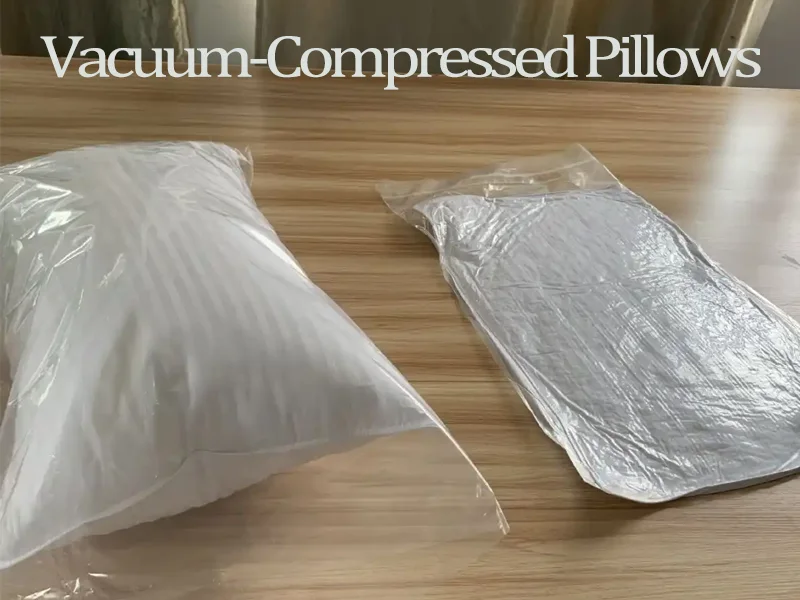
- Compressed Volumetric Weight: After high-ratio vacuum compression and roll-packing,the dimensions shrink to 45cm X 15cm X 15cm. The volumetric weight drops toroughly 2kg.
The shipping cost differential on a single unit alone can determine whether your store scales profitably or bleeds cash.
Material Selection: Which Pillow Fillers are the “Compression Kings”?
Vacuum compression is a double-edged sword. Excessive pressure can destroy the internal structure of the core, leaving overseas buyers with a flat, lifeless “pancake” and triggering a wave of 1-star reviews. Therefore, your first step is evaluating the resilience of the filling material.
A. Shredded Memory Foam — The Cross-Border Champion
- Shredded Memory Foam: Highly Recommended. Composed of hundreds of tiny memory foam clusters, it retains countless micro-air pockets. This structure is incredibly easy to compress. Because the pieces can shift dynamically during decompression, the pillow quickly regains its loft after a few quick slaps. It is currently the top-selling pillow configuration on platforms like Amazon and Wayfair.
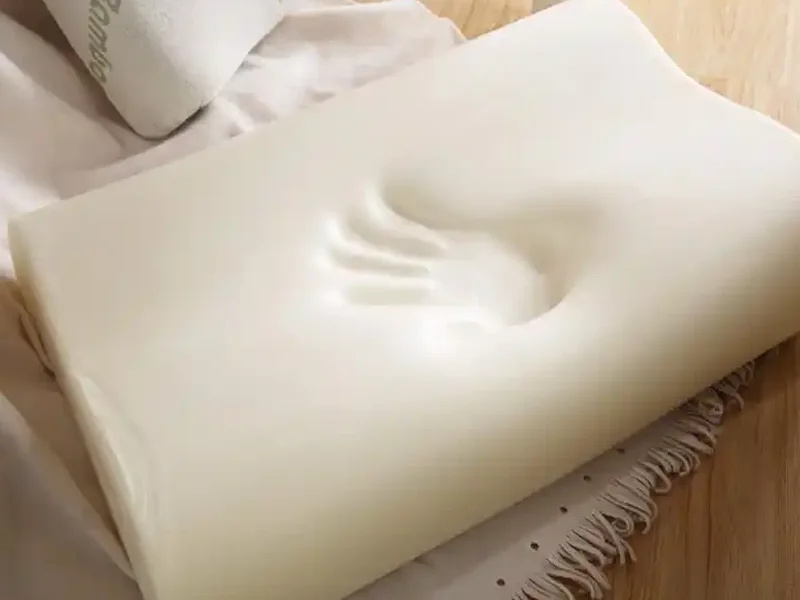
- Solid/Molded Memory Foam: Proceed with Caution. High-density, solid contour or ergonomic pillows can suffer irreversible deformation or cracking if subjected to heavy, long-term compression. If you must offer this type, you must strictly limit the compression ratio and warehouse storage duration.
B. Microfiber / Down Alternative — The Lightweight Specialist
- Microfiber/Polyester Down Alternative: Highly Recommended. This material offers an exceptional price-to-performance ratio and is highly pressure-resistant. It can be flattened to a paper-thin profile. While its natural rebound is slightly slower than memory foam, it consistently recovers 100% of its fluffiness within 24 to 48 hours of unboxing, all while keeping package weight to a minimum.
- Natural Down: Not Recommended for Budget/Mid-Tier Lines. Although natural down compresses well, prolonged vacuum pressure damages the delicate protein structures of the down clusters, reducing its insulation, loft, and longevity, while increasing the risk of trapped odors.
C. Natural Latex — The “No-Go Zone” for Long-Term Compression
- Natural Latex: Strongly Discouraged for Vacuum Packing. Latex features a delicate open-cell, honeycomb structure. If subjected to high vacuum pressure and stored long-term (over 30 days), the latex molecular chains break down, causing the pillow to lose its elasticity or literally crumble. If you choose to sell latex, you can only utilize micro-compression (removing 20% to 30% of air), which yields negligible savings on shipping.
Packaging Engineering: Minimizing Deflation and Leakage Rates
Selecting the right material is only half the battle; the next step is perfecting the packaging execution. A reliable cross-border compressed pillow must pass three strict packaging hurdles:
A. Film Composition: PA+PE Co-Extrusion is the Baseline
Never cut corners by selecting cheap, pure PE (Polyethylene) vacuum bags. Pure PE is brittle and lacks tensile strength; it easily develops micro-punctures during long maritime transit or rough handling in FBA fulfillment centers. If a bag deflates in the warehouse, the pillow will rapidly expand, bursting the master carton. This leads to heavy platform penalties, Amazon removal orders, and wasted inventory. You must specify a PA (Nylon) + PE co-extruded composite bag. This blend offers superior elasticity and puncture resistance, ensuring a leak-free seal for over six months.
B. Structural Form: Flat Pressing vs. Roll-Packed
- Flat Compression: The pillow is flattened into a rigid, board-like sheet. This is suitable for thin polyester pillows and multi-pack bundling.
- Roll-Packing (Highly Recommended): The pillow is vacuum-flattened and then fed through a rolling machine to form a compact cylinder. The cylindrical roll-pack is the gold standard for cross-border e-commerce. It minimizes volume even further and slides perfectly into sleek, branded mailer boxes or tubes, drastically elevating the premium Unboxing Experience necessary for DTC brands.
⚠️ Pro-Seller Tip (Crucial Operations Advice)
- Proactive Return Mitigation: You must print clear instructions directly on your product listing, insert cards, and packaging: “After opening, vigorously fluff the pillow and allow 24–48 hours for it to expand to its full, luxurious shape.” This simple warning intercepts up to 80% of impulsive, negative reviews from buyers who assume a freshly opened pillow is defective.
- Odour Management: A vacuum environment locks in the natural, harmless manufacturing odors of memory foam. Add a note to your user guide: “Due to prolonged vacuum sealing, a slight material scent may be present upon opening. Please leave the pillow in a well-ventilated, cool area for 24 hours, and the scent will completely dissipate.”
Supply Chain & Quality Control: Factory Audit Benchmarks
When vetting suppliers on international sourcing platforms, look beyond the basic FOB price. Evaluate their cross-border compatibility using these four advanced quality control benchmarks:
A. Extended Compression Rebound Testing
Due to sea freight timelines and shifting warehouse storage windows, your products may remain compressed for months. Demand samples from your manufacturer that have been kept under vacuum compression for at least 3 to 6 months, and conduct a live unboxing test.
- Gold Standard: The pillow should automatically regain over 80% of its original volume within 5 minutes of opening, and hit 100% within 24 hours with minor fluffing.
- Inventory Warning: The peak safety window for vacuum storage is 3 to 6 months. Ensure your operations team enforces a strict First-In, First-Out (FIFO) inventory flow in overseas warehouses to prevent permanent material fatigue.
B. Heat-Sealing & Valve Integrity Checks
Confirm whether the factory utilizes manual slide-zipper closures or industrial thermal-melt edge sealing. For cross-border shipping, industrial heat-sealing is non-negotiable to prevent slow air leakage. Furthermore, if your packaging uses a mechanical air valve, test whether its silicone gaskets harden or fail under low-temperature or high-pressure cargo holds.
C. Drop and Stress Simulation Tests
Request compressed samples and perform a 1.5-meter multi-angle drop test alongside a heavy load stack test to simulate container pressure. The vacuum bag must remain completely sealed without tearing or developing slow leaks when subjected to vibrations, drops, and the weight of stacked pallets.
D. Compliance and Environmental Certifications
Pillows destined for North American and European markets must comply with rigorous regional standards to avoid legal liabilities.
- For Memory Foam: The core must carry a CertiPUR-US® certification, proving it is made without ozone depleters, heavy metals, or harmful formaldehyde, and features low VOC emissions.
- For Cover Fabrics and Textiles: An OEKO-TEX® Standard 100 certification is essential. Missing these certifications leaves you exposed to product takedowns by platforms or catastrophic class-action lawsuits if a consumer files an environmental compliance complaint.
Summary
The strategy for dominating the cross-border pillow market boils down to a simple framework: “Start with material compliance (Shredded Memory Foam or Microfiber), commit to premium engineering (PA+PE Roll-Packing), perfect the unboxing experience (Managing expectations on loft and scent), and secure your supply chain (Enforcing FIFO and international certifications).”
By refining your product selection and mastering the art of vacuum volume reduction, you can turn a costly logistics bottleneck into a massive competitive advantage. While your competitors are busy paying exorbitant shipping rates for trapped air, your compact, roll-packed pillows will be quietly generating premium profit margins.
Comprehensive customization services for vacuum-compressed pillows
Mengfangge, a seasoned supply chain expert in the home textile industry, specializes in providing comprehensive customization services for vacuum-compressed pillows tailored for cross-border e-commerce sellers and global clients.
Whether you are targeting the premium market with trending shredded memory foam, scaling with highly cost-effective microfiber/down alternatives, or designing ergonomic solid contour pillows, Mengfangge can precisely customize the filler materials, dimensions, and density to match your brand positioning. Leveraging our industry-leading high-ratio vacuum compression and cylindrical roll-packing (Roll-packed) technologies—along with ultra-durable, leak-proof PA+PE co-extruded packaging—we help you drastically shrink product volume and slash international logistics costs, while guaranteeing a flawless, rapid rebound performance even after long-term warehouse storage.
We are your ultimate supply chain partner for building cross-border bestsellers and growing your DTC brand.
FAQ
Why is vacuum compression packaging mandatory for selling pillows cross-border?
International air and sea freight calculate shipping fees based on Dimensional Weight (Dim Weight) rather than just actual weight. Uncompressed pillows are extremely fluffy and take up massive space, forcing you to pay premium rates for trapped air. High-ratio vacuum compression and roll-packing shrink the package volume by 60% to 80% (e.g., dropping the volumetric weight from 9.45kg to around 2kg), drastically cutting logistics costs and protecting your profit margins.
Which pillow filling materials are suitable for vacuum compression, and which should be avoided?
Highly Recommended: Shredded Memory Foam and Microfiber/Polyester Fill. These materials have exceptional pressure resistance and elasticity, allowing them to recover their original loft perfectly.
Proceed with Caution: Solid/Molded Memory Foam. Long-term heavy compression can lead to irreversible cracking or shape deformation.
Strongly Discouraged: Natural Latex. The honeycomb cell structure of latex breaks down under long-term vacuum pressure, causing the pillow to lose elasticity or completely crumble upon unboxing.
What happens if a pillow deflates/leaks in the warehouse, and how can we prevent it?
If a compressed pillow leaks during long-term storage, it will expand rapidly, bursting the master carton and leading to platform penalties, removal orders, or rejected inventory. To prevent this, never use cheap, pure PE vacuum bags. You must utilize co-extruded PA (Nylon) + PE composite bags, which provide superior puncture resistance. Additionally, ensure the factory uses industrial thermal-melt edge sealing instead of manual slide-zippers to eliminate slow air leaks.
How long can a pillow safely remain under vacuum compression?
The golden safety window for vacuum storage is 3 to 6 months. If a pillow remains compressed beyond 6 months, even high-quality materials will suffer from material fatigue, resulting in a poor rebound rate when opened by consumers. It is critical for cross-border sellers to enforce a strict First-In, First-Out (FIFO) inventory management protocol in overseas warehouses to avoid dead stock.
A freshly unboxed compressed pillow looks flat or has a slight smell. How should we guide customers?
This is completely normal. The vacuum seal temporarily traps the natural, harmless manufacturing scent of the new foam, and the fibers need time to expand. You should proactively guide customers via your listing images, user manuals, or insert cards with two simple tips:
Loft Recovery: Vigorously shake and fluff the pillow after opening, then allow 24–48 hours for air to fully expand the core.
Odor Dissipation: Place the pillow in a cool, well-ventilated area for 24 hours to let the harmless material scent naturally clear up. Pre-empting these issues eliminates up to 80% of impulsive negative reviews.
What kind of customization services can Mengfangge provide for cross-border sellers?
Mengfangge provides end-to-end vacuum-compressed pillow customization solutions. We can deeply customize fillers (shredded memory foam, microfiber, etc.), sizes, and density based on your brand positioning. Backed by mature high-ratio compression and roll-packing technology, we use high-strength, leak-proof PA+PE packaging. We also support international compliance with CertiPUR-US® and OEKO-TEX® Standard 100 certifications to help you build profitable, law-compliant cross-border bestsellers.