With the widespread adoption of healthy sleep concepts, memory foam pillows (slow-rebound polyurethane pillows) have become the top choice for many families looking to improve their sleep quality, thanks to their exceptional pressure-relief capabilities. However, in the 2026 bedding market, the prices of memory foam pillows vary from dozens to thousands of dollars, and the quality is highly uneven.
To cut costs, many low-priced, inferior pillows brazenly violate health standards by using shredded scrap foam and recycled materials rebonded with glue, or by employing extremely low-end inferior foaming processes. These products not only offer zero comfort but also pose severe hazards due to excessive volatile organic compound (VOC) emissions. Long-term use can seriously compromise both respiratory and cervical spine health.
To ensure you don’t fall into these consumer traps, this buying guide will dissect the core technical indicators, showing you exactly how to distinguish high-quality native foaming processes from inferior recycled materials at a glance.
Table of Contents
Inspect the Microstructure: Native Open-Cell Foaming vs. Closed-Cell & Recycled Material Layers
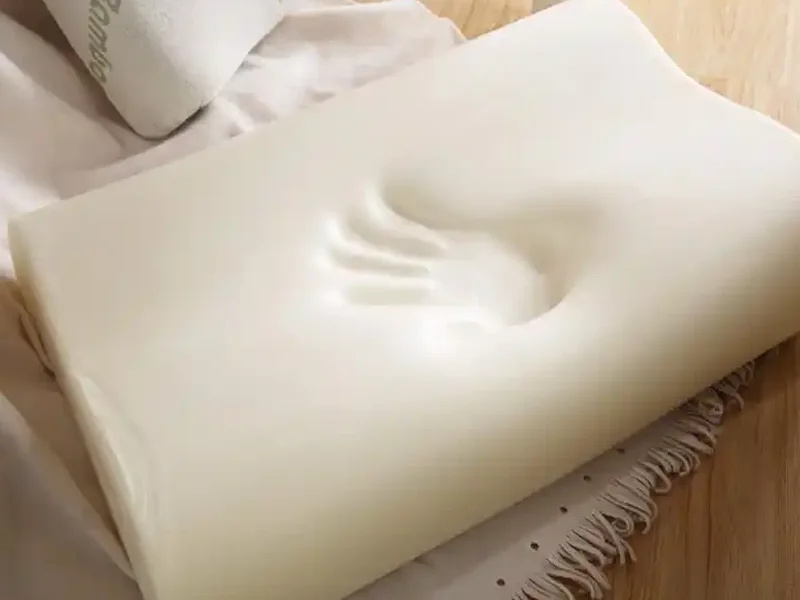
The core of a high-quality memory foam pillow lies in its scientific Foaming Process. Currently, the industry’s cutting-edge technology utilizes integrated molding with native open-cell foaming. Under a microscope, this process reveals a uniform, interconnected “micro-air-chamber” structure that breathes freely and disperses pressure evenly.
In contrast, inferior recycled materials and low-end foaming exhibit two fatal flaws:
- The “Impurity Stratification” of Recycled Material: Recycled foam (bonded foam) is typically made by crushing industrial waste and old mattress foam, then press-molding it back together with industrial glue. If you cut the pillow core open, you will see uneven colors and granular layers filled with black spots and impurities, completely lacking a uniform pore structure.
- The “Trapped Air” of Low-End Closed-Cell Foaming: Even if some manufacturers use new raw materials, outdated foaming control technology results in isolated closed cells. Air cannot flow freely, making the pillow feel like a piece of airtight plastic foam that becomes stiflingly hot in the summer.
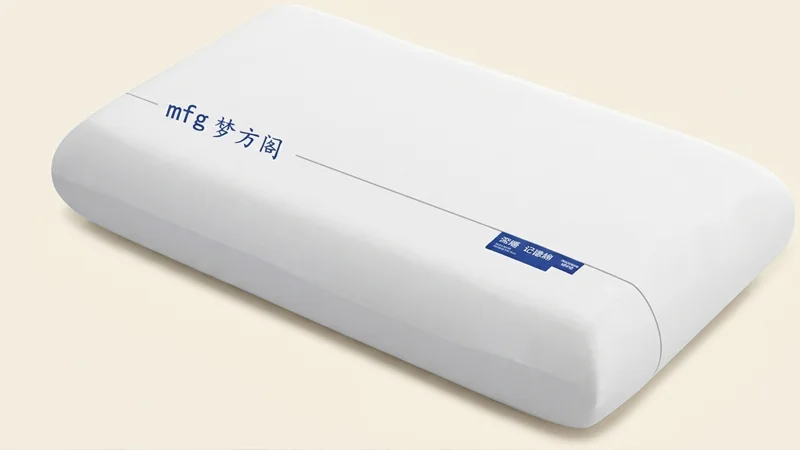
As a leading representative of premium domestic bedding, Mengfangge Memory Foam Pillows steadfastly utilize internationally advanced native MDI integrated injection molding technology. Mengfangge rejects all recycled materials and secondary processing, ensuring that every single pillow core achieves an open molecular structure of over 95%. This not only guarantees a pure, flawless core but also allows every breath to feel effortless and natural.
Test the Rebound Performance: 5-8 Second Golden Slow-Rebound vs. Stiff or Instant Rebound
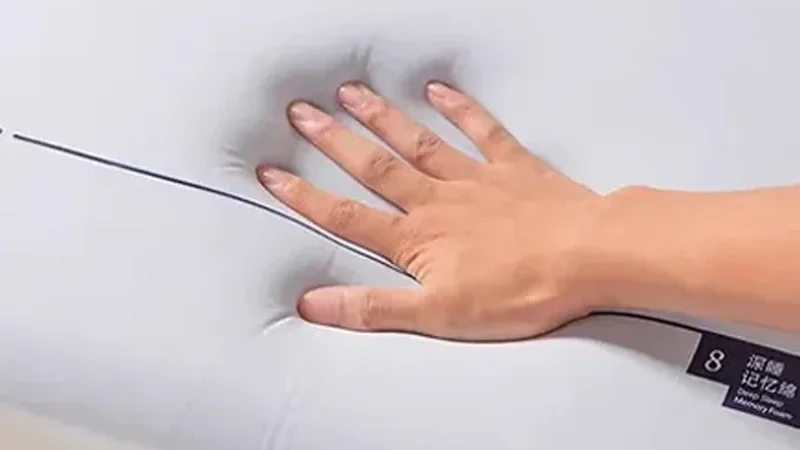
The reason memory foam can protect the cervical spine is its Viscoelasticity. When you lie down, it dynamically shapes itself according to your body temperature and weight, achieving zero-pressure wrapping. The most direct way to identify craftsmanship quality is to perform an “indentation force deflection test.”
Press your palm firmly into the pillow and release it, then carefully observe its recovery speed:
- Golden Slow-Rebound (5-8 Seconds): Pillows crafted with high-quality foaming processes generally take 5 to 8 seconds to recover their shape. After releasing your hand, you will see the handprint slowly rise like shifting sand. This indicates that the internal air chambers are orderly drawing in air, perfectly absorbing head vibrations.
- Instant Rebound (Less than 2 Seconds): If the pillow snaps back immediately upon releasing your hand, it is not memory foam at all—it is ordinary high-rebound sponge, which completely fails to release cervical pressure.
- Stiff with Zero Elasticity: Pillows made from inferior recycled materials feel stiff due to the addition of large amounts of low-grade glue. Pressing down feels like stepping into dead mud, resulting in an extremely slow recovery or permanent deformation.
Through tens of thousands of fatigue tests, Mengfangge Memory Foam Pillows have meticulously fine-tuned a 6-second golden slow-rebound curve that aligns perfectly with human ergonomics. No matter how you toss and turn, Mengfangge dynamically responds with silky-smooth support for your cervical spine, keeping head blood vessels and nerves free from pressure, allowing you to truly experience a “zero-pressure sleep” akin to floating on clouds.
Explore the Production Source: Fully Automated Modern Production vs. Workshop-Style Manual Pouring
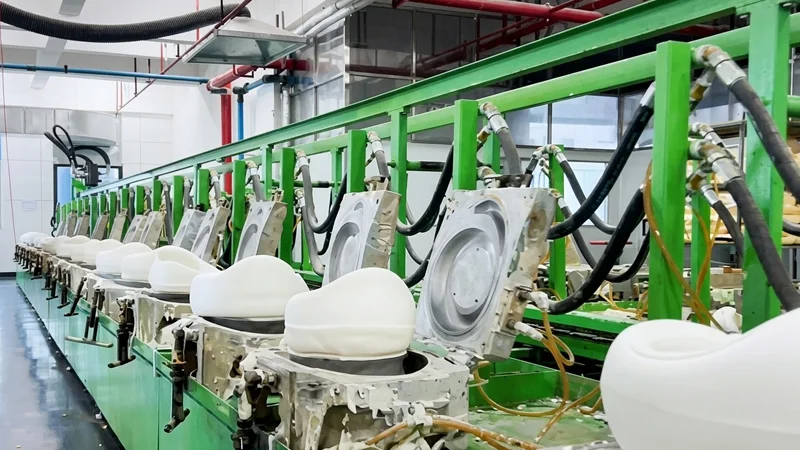
The density and uniformity of memory foam are highly dependent on the temperature and humidity control and formula precision along the production line. High-quality memory foam pillows generally feature a density between $50kg/m^3$ and $80kg/m^3$, which requires highly sophisticated industrial equipment to execute.
- Workshop-Style Production: Low-end, inferior pillows on the market often originate from small, poorly ventilated workshops. Workers manually stir chemical raw materials in large buckets and pour them carelessly. Pillows produced in such environments have highly uneven densities (soft on one end, hard on the other) and suffer from incomplete chemical reactions, leaving behind severe residues of free formaldehyde and isocyanates that emit a pungent chemical stench.
- Digital Precision Control: True quality brands conduct their foaming processes within completely enclosed, temperature-and-humidity-controlled digital cleanrooms. This ensures that every drop of raw material reacts fully, transforming into non-toxic and harmless polyurethane.
In pursuit of ultimate quality, Mengfangge has invested heavily in constructing a digital intelligent production base. Every step of the injection, foaming, and curing processes for Mengfangge memory foam pillows is precisely managed by automation. By eliminating human error at the source, the pillow cores achieve uniform density through and through, meeting infant-grade environmental standards straight out of the factory—completely odor-free and significantly safer.
Verify Health Guarantees: Eco-Friendly Non-Toxic Testing vs. Harmful VOC Overload
A pillow is an item that comes into intimate contact with us for 8 hours every day; safety during those hours of breathing is paramount. Inferior recycled materials incorporate a massive amount of unidentified industrial glues during manufacturing, continuously releasing carcinogens like benzene and toxic VOCs (Volatile Organic Compounds).
When purchasing a memory foam pillow in 2026, do not look at price alone. You must ask the merchant to provide authoritative inspection reports:
| Comparison Metric | High-Quality Native Foaming Process | Inferior Recycled Material / Low-End Foaming |
| Core Raw Materials | Pure Polyurethane (MDI System) | Waste Foam, Industrial Scraps, TDI System |
| Odor Performance | Virtually odorless, only a faint physical material scent | Pungent, eye-irritating, long-term chemical stench |
| Eco-Certifications | Passed CertiPUR-US or Swiss OEKO-TEX | No certifications, or provides fraudulent test reports |
| Service Life | Consistent for 5-8 years, resists collapsing or hardening | Collapses quickly in 3-6 months, yellows, and sheds crumbs |
Buying Maxim: It is far better to spend a little more money on health than to use your respiratory system as a “human air purifier” for inferior recycled materials.
Choosing a Mengfangge Memory Foam Pillow means choosing peace of mind for yourself and your family. The entire Mengfangge product line has passed rigorous national environmental and safety dual-certifications, with hazardous substance emissions approaching zero. Paired with a specially developed, luxurious, skin-friendly, and breathable outer cover, it is antibacterial and anti-mite. Even individuals with sensitive skin, the elderly, and children can breathe deeply and enjoy a night of healthy, sound sleep.
FAQ
What is the difference between Solid and Shredded memory foam pillows, and which should I choose?
Solid Memory Foam: Made from a single, contoured piece of foam. It offers targeted ergonomic support (perfect for neck alignment) and a deep, contouring hug. However, its height and firmness are fixed, and it can sometimes feel a bit restrictive.
Shredded Memory Foam: Filled with thousands of tiny foam pieces. Its biggest advantage is adjustability—most come with a zipper so you can add or remove filling to customize the loft (height) and firmness. It also feels more like a traditional plush pillow and offers much better airflow.
Why do some memory foam pillows feel “too hot” or “too firm”? How can I avoid this?
Traditional dense memory foam tends to trap body heat and can harden when exposed to cold room temperatures.
To beat the heat: Look for pillows with built-in cooling technologies, such as open-cell structures, gel-infused memory foam, or breathable covers made from bamboo or phase-change materials (PCM). Shredded memory foam also sleeps significantly cooler than solid foam due to the space between the pieces.
To adjust the firmness: If you are sensitive to a firm feel, opt for an adjustable shredded memory foam pillow so you can reduce the filling for a softer, more pressure-relieving surface.
How do I choose the right memory foam pillow based on my sleeping position?
The ultimate goal is to keep your head, neck, and spine in a neutral alignment (a straight line):
Side Sleepers: You need a higher loft (thicker) and firmer pillow to fill the gap between your ear and outside shoulder, keeping your neck from bending downward.
Back Sleepers: A medium loft and medium firmness pillow is ideal. Contoured solid foam pillows work wonderfully here to cradle the natural curve of your neck.
Stomach Sleepers: Sleeping on your stomach strains the neck. You need a very thin, soft pillow (or a shredded pillow with most of the filling removed) to keep your head as flat to the mattress as possible.
Can I wash a memory foam pillow in the washing machine? How should I clean it?
No, you should never put the memory foam core into a washing machine or dryer. The spinning and twisting motions will rip the foam apart, and memory foam acts like a giant sponge—once water gets inside, it is incredibly difficult to dry, leading to mold and mildew.
How to clean: Only spot clean the foam core with a damp cloth and mild detergent if absolutely necessary.
Maintenance: Always use a removable, washable pillow protector and pillowcase. Regularly wash the cover, and let the foam core air out in a well-ventilated, shaded area. Never expose memory foam to direct sunlight, as UV rays degrade the material.
My new memory foam pillow has a strong chemical smell. Is this normal and safe?
Yes, this is entirely normal and is known as “off-gassing.” Because memory foam is a synthetic polyurethane material, harmless gases get trapped inside when it is manufactured and sealed fresh off the factory line.
What to do: Unwrap the pillow and let it air out in a well-ventilated room or a shaded outdoor area for 24 to 48 hours before using it. To ensure safety, look for pillows with third-party certifications like CertiPUR-US® or OEKO-TEX®, which guarantee the foam is non-toxic and free of harmful chemicals.
How long does a memory foam pillow typically last, and when should I replace it?
A high-quality memory foam pillow generally lasts between 2 to 3 years with proper care. You should replace your pillow if you notice any of the following warning signs:
Loss of support: The pillow sags, feels lumpy, or no longer bounces back to its original shape.
Physical damage: The foam core begins to crack, crumble, or break apart.
Waking up in pain: You frequently wake up with morning neck stiffness, headaches, or shoulder pain.
Hygiene issues: The pillow has developed stubborn odors, permanent yellow sweat stains, or is triggering your allergies.